Dear Literary Folk,
What a legion of writers we’ve lost in the past year, among them Q.R. Hand, Diane DiPrima, Michael McClure, and most recently, Lawrence Ferlinghetti. On Monday last, driving down the coast, I passed Pacifica’s Rockaway Beach, and found myself quoting from Ferlinghetti’s “A Far Rockaway of the Heart”:
he followed her into the playland of that evening
where the headlong meeting
of their ephemeral flesh on wheels
hurtled them forever together
And I now in the back seat
of their eternity
reaching out to embrace them
The original Rockaway Beach is, of course, in Queens—a vast, sandy beach and 5.5-mile boardwalk that draws families in summer for swimming, sunbathing. But associative logic leaps over geographic distances in a wink. The next day I learned that Ferlinghetti had died on that very Monday. By Tuesday, FaceBook was brimming with tributes from those who had known him, loved him, been influenced by him, or simply found a second home in City Lights Bookstore. Among those FaceBook posts was one by Petaluma poet Carol Hoorn. I asked her to expand her post into a short feature, and I’m delighted to be able to share this with you here.
When I asked Carol to suggest a poem by Ferlinghetti to be included as the poem for March, she recommended “Challenges to Young Poets.” Scroll down and you’ll find it there, along with an invitation to young Sonoma County poets to share their original work on the theme of Equity and Compassion.
TRIBUTE TO LAWRENCE FERLINGHETTI
by Carol Hoorn
 I dropped out of San Jose State and found a job at Fireman’s Fund in 1955. Black stilleto heels, pencil skirts and white blouses were week day choices. Week-ends meant black turtlenecks, leggings, and Capezios , red lipstick, and very black mascara. It was easy to be a weekend beat (spelled lower case then).
I first met Lawrence Ferlinghetti that year. I called him Mr. Ferlinghetti till 1959. By then I had purchased all the banned books featured in City Light’s front window. Ginsburg, Anais Nin, Henry Miller, James Joyce, and others. I met the first two authors and soon many more. I am glancing now at my 1954 edition of Ulysses, published in London, so proudly displayed by the man that I was by then calling Lawrence. Never Larry, as I felt that was meant for close friends.
I attended many readings in the basement of that building. Sometimes music accompanied a poet. I did not always understand what I listened to, but found I would often laugh, cry, tremble in passionate response whether I “got it” or not. I always seem to grasp the meaning of Lawrence’s poems, his deep sonorous voice wrapping round me, sending love, humor, tenderness, righteous anger, sometimes all in the same poem.
When the readings ended, the crowd most often walked across the alley to Vesuvio’s, where on any given night, a physical fight might occur over a chess game, a shouted argument over existential positions, or who was a true beat or a fake. I fell into this second category, but was always accepted. Even sat in Ken Casey’s bus once, going nowhere in front of City Lights.
Some years ago, I shared with Lawrence my written version of how I desired to spend the last three weeks of my life. He, perhaps half serious, promised to go to Paris with me, as long as I promised not to die on his watch.We would attend the Opera—La Bohème, of course. Dine on seven course dinners, just café in the mornings. Champagne bucket at our bedside where we would spend the afternoons till eventide reading Collette and Maupassant, under silk sheets with lovers and others, depending on our desires.On my final day, we would walk to Père-Lachaise, where I would stay near Oscar Wilde or Edith Piaf (to be decided later).
 In 2017, I had someone copy onto a CD an old reel to reel tape made in 1960 by my late husband of Lawrence reading his poem “Pondering the Insoluble Problem.” Visiting City Lights from my by then home in Petaluma, I found Lawrence putting some new books in the window. I blurted out the first lines of that poem, attempting to imitate him. He burst into laughter, saying he had almost forgotten that one. We tried in vain to find it in his vast collection on the second floor, but could not. I sent the CD as a gift. His thank-you note mentioned that he thought he sounded wonderful, and perhaps would include it in a documentary being made of his life.
I read his poems to my granddaughters and when poets and writers gathered physically. I will repeat them again, when it is safe.
Now that I feel closer to you, in my grief, I will say, “I love you, always and forever, Larry.”
Carol Hoorn
♦♦♦
 Carol wasn’t the only Petaluman writing about Ferlinghetti’s passing. Connie Madden also contributed a blog to Petaluma 360, titled “Lawrence Ferlinghetti, alive and well and living in my head. . . .” In the article, she reminisces, “As a 20 something, I hitchhiked across the Bay maybe 10 times from Berkeley to City Lights Bookstore in North Beach, San Francisco, a comb and library card with some money in my little suede wrist bag, a stenopad for poetry, half full, in my hand. Feeling I might never come back, I’d head out alone to meet my fate, freedom was the word. A lot like I imagined the life of the beat poets in San Francisco and Paris. If Berkeley was the philosphical center of the world (it was to me!), surely City Lights was its literary watering hole.”
Here’s the link to read Connie’s piece in its entirety: http://connie-madden.blogs.petaluma360.com/13689/lawrence-ferlinghetti-alive-and-well-and-living-in-my-head/.
POETRY IN ACTION: A YOUTH POETRY READING AND CONVERSATION
ON EQUITY AND COMPASSION
By Liz Larew
On Saturday, April 17, Sonoma County United in Kindness will present a poetry reading by Sonoma County teens, age 13-19. The online event will be hosted by Zoya Ahmed, 2020 – 2021 Sonoma County Youth Poet Laureate
United in Kindness hopes to provide a supportive forum and public platform, designed and hosted by and for Sonoma County youth, ages 13–19, to write, present, and have conversation about the topics of equity and compassion, through the art of poetry, with a focus on the practice, experience, meaning of, reflection upon, and/or power of equity and compassion — on a human scale, in the US, and in their day-to-day lives. To include the topics of inclusion, tolerance, unity, social justice, kindness, and equality. To engage youth in a conversation of equity and compassion…through the power of poetry. In celebration of April — National Poetry month.
This event will include a live open mic, providing an opportunity to read an original poem, or one written by any poet of choice. Limited to one poem or up to two minutes. “Family friendly” language poems please. Closed video will be an option; signed parent/guardian authorization required for ages 13–17.
Topic/Suggested prompts: What do you want to say about equity and compassion? What do equity and compassion mean to you? How have you experienced them in your life? How do you practice them in your life? What power do they have in our world? How do they relate to tolerance, diversity, unity, social justice, kindness, and equality? Say it through the power of poetry!!
Please sign up in advance for open mic — deadline Friday, March 26
Email YouthPoetry-UIK@InterfaithSonoma.org to sign up. A practice session will be scheduled prior to the event – date to be announced.
https://www.facebook.com/SonomaCountyUnitedinKindness/
http://interfaithsonoma.org/declaration/
YouthPoetry-UIK@InterfaithSonoma.org
SPOTLIGHT ON MARCH LITERARY EVENTS
Our March literary events calendar has much to offer. I’ve selected just a few for the spotlight here.Phyllis Meshulam (our Poet Laureate), Donna Emerson, and Jodi Hottel: a triple header of Sonoma County Poets at Rivertown Poets: Join the meeting Monday, March 1, 6:15-8:15 pm at https://zoom.us/j/6508887879 or just show up at aqus.com/online. Click on “Weekly Poetry Reading.” No password needed.
Fran Claggett-Holland and Linda Loveland Reid will present poetry readings and discussions on Friday, March 5, April 2 and May 7, 11:00 a.m.-12:30 p.m. Their program is called Power of Poetry, and is an online class available through Sebastopol Center for the Arts. Free or small donation appreciated: https://www.sebarts.org/lectures
“Pandemic Perspectives” is a compilation of short plays/films by local talent about life during the pandemic. This will be presented online by Cloverdale Performing Arts Center on Saturday, March 6-Sunday, March 14. Cloverdale Performing Arts Center presents Online with $15 tickets available at: www.cloverdaleperformingarts.com/pandemic-perspectives-march
Elizabeth Herron reads from recently published Insistent Grace. Sunday, March 21, 4:00 p.m. Occidental Center for the Arts Virtual Book Launch Series: Admission free, but registration required at OCA website (occidentalcenterforthearts.org) to receive Zoom link.
POEM FOR MARCH
Challenges to Young Poets
by Lawrence Ferlinghetti
Invent a new language anyone can understand.
Climb the Statue of Liberty.
Reach for the unattainable.
Kiss the mirror and write what you see and hear.
Dance with wolves and count the stars,
including the unseen.
Be naive, innocent, non-cynical, as if you had
just landed on earth (as indeed you have, as
indeed we all have), astonished by what you
have fallen upon.
Write living newspapers. Be a reporter
from outer space, filing dispatches to some
supreme managing editor who believes in full
disclosure and has a low tolerance level for hot air.
Write an endless poem about your life on
earth or elsewhere.
Read between the lines of human discourse.
Avoid the provincial, go for the universal.
Think subjectively, write objectively.
Think long thoughts in short sentences.
Don’t attend poetry workshops, but if you do,
don’t go to learn ‘how to” but to learn
“what” (What’s important to write about).
Don’t bow down to critics who have not
themselves written great masterpieces.
Resist much, obey less.
Secretly liberate any being you see in a cage.
Write short poems in the voice of birds.
Make your lyrics truly lyrical. Birdsong is not
made by machines. Give your poems wings
to fly to the treetops.
The much-quoted dictum from William Carlos
Williams, “No ideas but in things,” is OK for
prose, but it lays a dead hand on lyricism,
since “things” are dead.
Don’t contemplate your navel in poetry and
think the rest of the world is going to think
it’s important.
Remember everything, forget nothing.
Work on a frontier, if you can find one.
Go to sea, or work near water, and paddle
your own boat.
Associate with thinking poets. They’re hard
to find.
Cultivate dissidence and critical thinking.
“First thought, best thought” may not make
for the greatest poetry. First thought may be
worst thought.
What’s on your mind? What do you have
in mind? Open your mouth and stop mumbling.
Don’t be so open-minded that your brains fall
out.
Question everything and everyone. Be subversive,
constantly questioning reality and
the status quo.
Be a poet, not a huckster. Don’t cater, don’t
pander, especially not to possible audiences,
readers, editors, or publishers.
Come out of your closet. It’s dark in there.
Raise the blinds, throw open your shuttered
windows, raise the roof, unscrew the locks
from the doors, but don’t throw away the
screws.
Be committed to something outside yourself.
Be militant about it. Or ecstatic.
To be a poet at sixteen is to be sixteen, to be
a poet at 40 is to be a poet. Be both.
Wake up and pee, the world’s on fire.
Have a nice day.
– Lawrence Ferlinghetti, “Challenges to Young Poets”
Terry Ehret
Co-editor, Sonoma County Literary Update
 Amanda Gorman’s stellar recital of “The Hill We Climb” brought poetry front and center to the inauguration ceremonies in Washington and to the political drama on the national scene. The nation’s first Youth Poet Laureate will also be making an appearance at the Super Bowl on February 7.
 On January 17, the Sitting Room posted a short article about Gina Berriault in a new online feature called “Sunday Surprise.” Many of you may be on the Sitting Room’s mailing list, and so have already seen this. But reading this reminded me that Barriault’s great talent was not known as widely as she deserved, and so I thought this article merited reproducing here in the Sonoma County Literary Update.
 I was introduced to Gina Berriault’s work when I was teaching at SF State through my colleague Molly Giles. I was also teaching at SRJC and serving on the Arts and Lectures Committee, and had the honor and pleasure of hosting Berriault as a guest writer at the JC following the publication of her collection Women in their Beds: New and Selected Stories (1996), which won the PEN/Faulkner Aeard, the National Book Critics Circle Award, and the Bay Area Book Reviewers Award.
 Here is how the so unlikely book came about and here is how it came to the Sitting Room. Again it is a local story. Guy Biederman, publisher of “Bust Out”, who was teaching workshops at The Sitting Room, noticed our Berriault books.
 José Luis Gutiérrez was born in Miami and grew up in Panama. His first poetry collection, A World Less Away, was published in 2016. His second collection, The Motel Entropy & Other Sorrows, came out in 2019. He’s also a screen writer and film maker.
 By Assétou Xango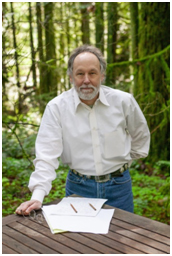
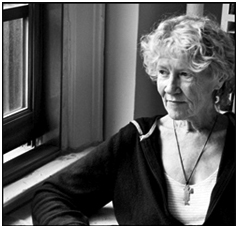

 PEN Oakland, called “The Blue Collar PEN” by The New York Times, is honoring Maya Khosla’s All the Fires of Wind and Light with the Josephine Miles Literary Award.
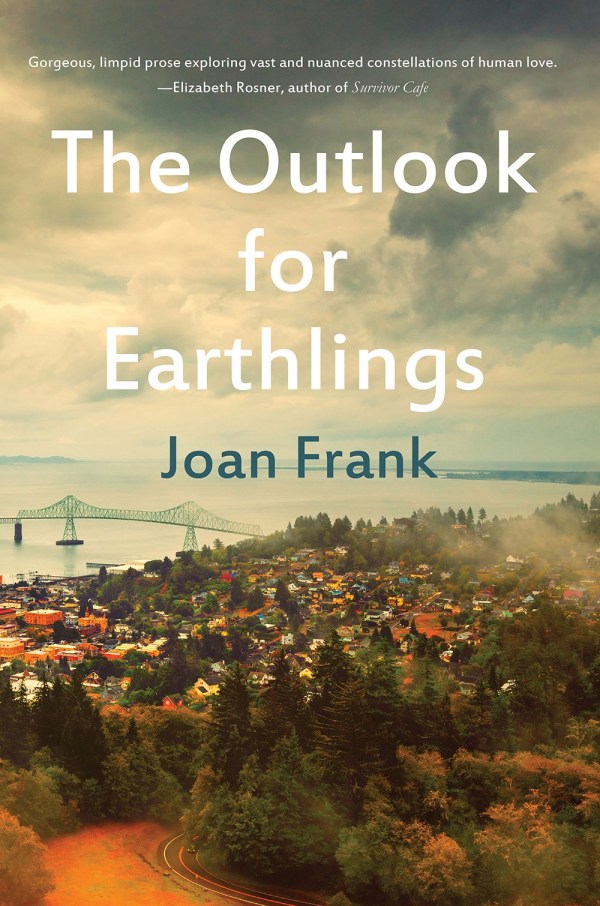


 by Kay Ryan
 On October 25, our literary community lost a great poet, Diane Di Prima. Born and raised in Brooklyn, New York, Di Prima became part of Greenwich Village’s beat scene in the 1950s and 60s, publishing poetry, editing a newsletter The Floating Bear, co-founding the New York Poets Theatre, and later The Poet’s Press. She moved to California in 1968, lived for a time in Marshall, and settled in San Francisco where she taught at New College of California, California College of Arts and Crafts, San Francisco Art Institute, California Institute of Integral Studies, and
 For more than 20 years, the Petaluma community has held an evening of poetry for Sonoma County and beyond to remember those we have lost. Since 2004, the Día de los Muertos Committee has included this event in its month-long celebration of the Day of the Dead. Many of you have been part of this annual event over the years, as featured readers and as part of the community reading.


 Many of you already know that Sonoma County’s beloved novelist and memoirist Jean Hegland and her husband Douglas Fisher lost their home in the LCU Complex/Wallbridge fires last month. The Healdsburg Tribune invited Jean to write a feature about her experience, which was published on September 23: “Unnatural Disasters.” In the article, Jean reflects on her home and the surrounding woods, writing, “Soon after we moved there (in 1989), that forest had been the inspiration for my first novel, and it had been an inspiration, a solace and a delight ever since.” In response to a friend’s comment about the fire being a natural disaster, Jean reflects, “There was nothing natural about the Walbridge Fire. Instead, it had been caused by the unfortunate conjunction of record-breaking high temperatures, a freak electrical storm that had bombarded Northern California with over 12,000 lightning strikes, and many decades of fire suppression in a forest that had evolved to burn. It was not a natural disaster but an unnatural one, not an “act of God,” but the result of human ignorance and greed, that same lethal combination of opportunism and denial that is currently causing record flooding in China and a record-breaking hurricane season in the Atlantic.”
 Iris’s just released biography is a triumph of biographical and literary research. She’ll be giving several readings/interviews in October. Here are the dates and hosts. For details, check the calendar page.
 To add to the onslaught of 2020 disasters, on September 18, we lost a champion and hero, Ruth Bader Ginsburg. She served on the Supreme Court from 1993 until her death, making history through majority opinions, and making waves though her eloquent and brilliant dissenting opinions. Before her Supreme Court nomination, she served as legal counsel to the ACLU, and it was during the years 1973-1980 that she prepared and argued cases that would alter the lives of American women, bringing us closer to the goal of “equal protection under the law.”
 Taking advantage of the COVID hiatus, the Sitting Room Community Library is undergoing renovations to make it even more welcoming to reading and writing groups, literary researchers, workshops, readers and writers once it’s able to open again. Among the changes are new flooring in the living room/workshop space (do you recognize it her in the photo?), new shelving, new electrical system, a less cluttered kitchen area, the addition of a microwave (yeah!). JJ Wilson writes that “We are working on the several suggestions for better storage for the art collection and plan to have exhibit areas built in for revolving art pieces and a foam core board posted up near the television cabinet for exhibits.”
 Join us online for our fall fundraiser with Prageeta Sharma and Matthew Zapruder, Sunday, October 11, 2020 at 3 PM Pacific time.
 Sun Bear
 Gail Newman and Cecilia Woloch
 Book Launch for Beside the Well
  In this reading, launched less than a month and a half before the 2020 presidential election, some of our country’s finest poets address the social and political rifts that currently divide our country. Please join us for the launch of this timely and important video featuring contributors to our anthology, America, We Call Your Name: Poems of Resistance and Resilience, reading their poems and others from the book:
 Rick Barot, Joshua Bennett, Mai Der Vang, Camille Dungy (pictured here), Dante Di Stefano, Judy Halebsky, Forrest Hamer, Brenda Hillman, and Evie Shockley.
 Although I recognize not everyone feels comfortable engaging in political gestures, such as this open letter recommends, I pass this along at the request of Cole Swenson. Cole and I graduated from SF State’s Creative Writing Program in 1984an auspicious date! She is a poet, translator, editor, copywriter, and professor. Originally from Kentfield, California, she now divides her time between Paris and Providence, RI, where she is on the permanent faculty of Brown University’s Literary Arts Program.
 “2020 marks 10 years since the 100 Thousand Poets for Change movement began. It has been a breathtaking experience to work and create together in community building with you, and to witness a global community working for positive change.
 Last week, we lost a great leader of Civil Rights, John Lewis, who wisely said, “The vote is the most powerful nonviolent tool we have.”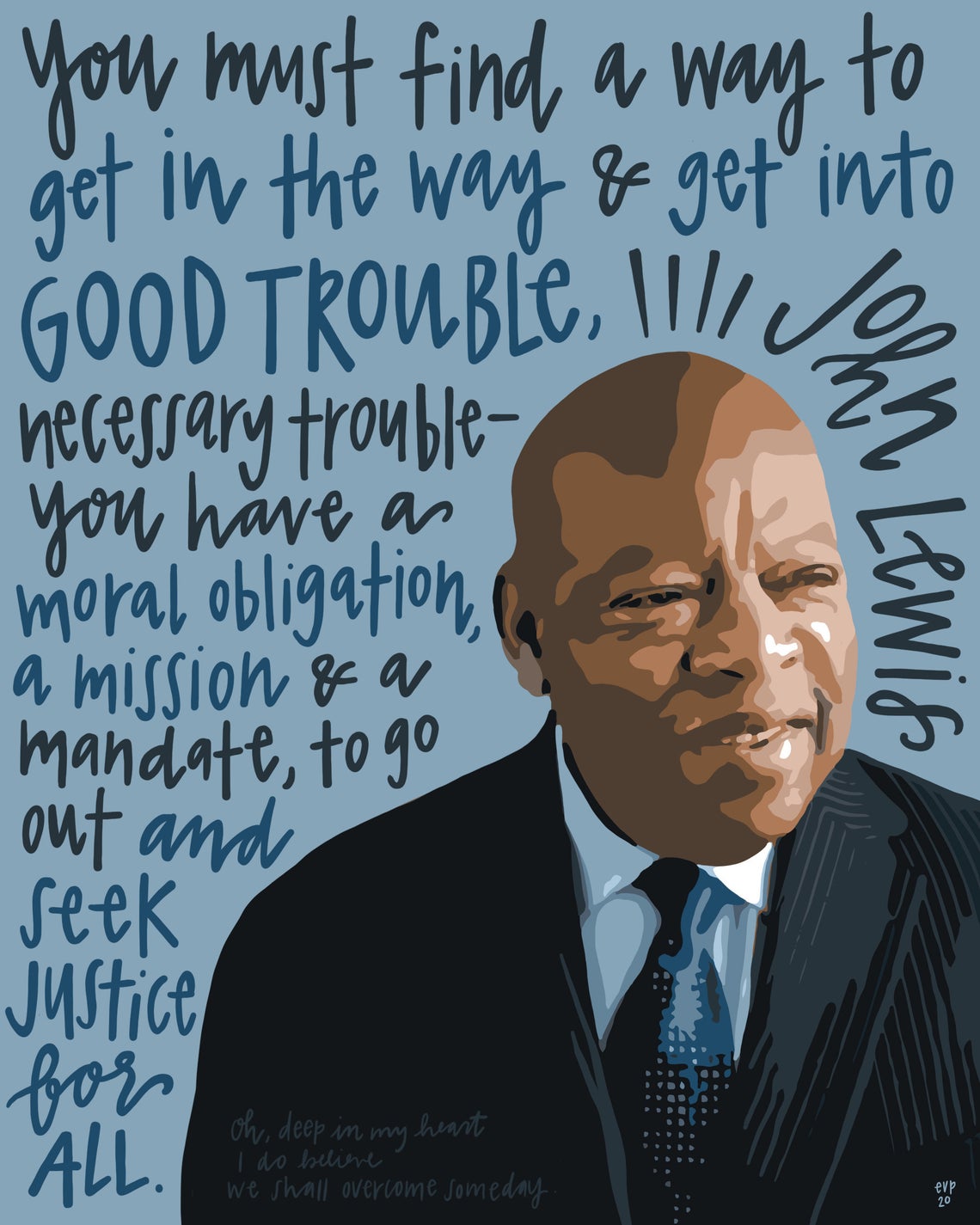
 First and foremost, you join Phyllis Meshulam’s Poet Laureate Project: Phyllis is inviting all of us to help her create an anthology of poems for the times we are living. One section will be devoted to the theme of “Honoring Our Pain for the World.” Check out the inspiring and provocative quotes from Patricia Smith, Camille Dungy, and Joseph Zaccardi on Phyllis’s Poet Laureate page:
 little prayer


 Kathleen is author of three poetry collections, including Transformer (March 2020), selected by Maggie Smith for the Hilary Tham Collection at The Word Works Press. Winter’s second book, I will not kick my friends, won the Elixir Poetry Prize, and her debut collection, Nostalgia for the Criminal Past, won the Texas Institute of Letters Bob Bush Memorial Award and the Antivenom Poetry Prize. Her poems have appeared in The New Republic, The New Statesman, Poetry London, Agni, Cincinnati Review, Tin House, Michigan Quarterly Review and other journals. She has received fellowships from Sewanee Writers’ Conference, Dora Maar House, James Merrill House, Cill Rialaig Project and Vermont Studio Center. Her awards include the Poetry Society of America The Writer Magazine/Emily Dickinson Award and the Ralph Johnston Fellowship at University of Texas’s Dobie Paisano Ranch. Winter is an associate editor at 32 Poems. She teaches creative writing at Santa Rosa Junior College and Sonoma State University.
 Researching and writing Krisanthi’s War: in Hitler’s Greece has been Ida Egli’s project for many years; finally it has been released by local publisher McCaa Books and is available on
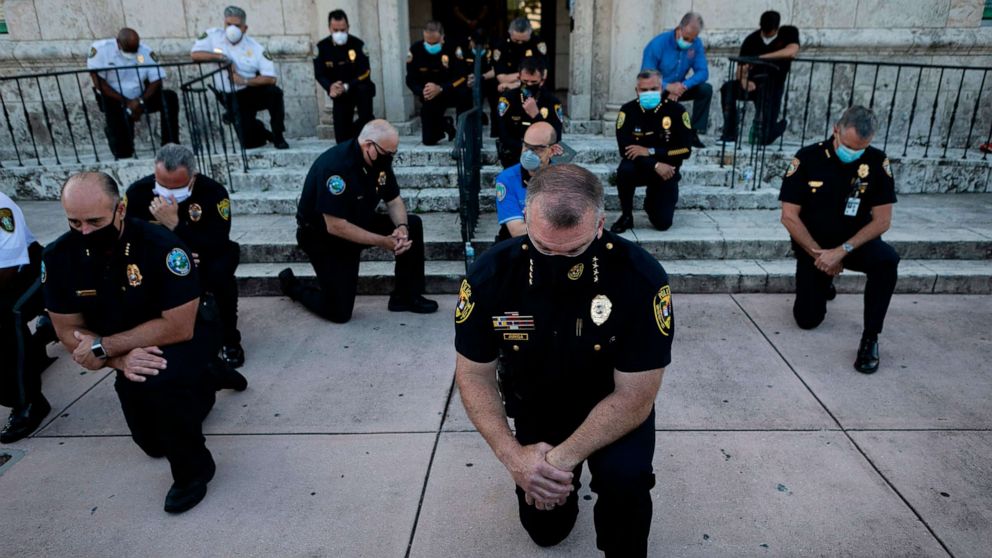
  Lucille Clifton’s birthday was just a few days ago. On June 27, she would have been 84. In the early days of shelter-in-place, when we were singing Happy Birthday to make sure we were washing our hands for 20 seconds, a meme circulated on the Internet proposing reciting this poem while hand-washing. This was before the Black Lives Matter protests erupted in the aftermath of George Floyd’s murder, with their invitation to re-examine our identities, our assumptions, the racism that is so tightly woven into our history and society. Reciting this poem every day might move us all in the direction of empathy and necessary change.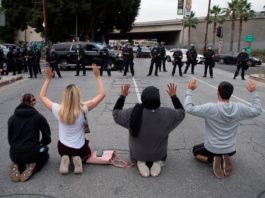


 Sonoma County Literary Update
You must be logged in to post a comment.